The second Town Hall of the three the team planned for Star Atlas Summer just wrapped up! Below, we’re providing a summary/report of the whole event, capturing all the news shared.
On stage are Santi (VP of Community & Ecosystem) and Michael (CEO).
Noteworthy News
- Iris Quest, the community-driven UE5 tournament, will take place on August 24th. The team will participate again with their all-star team: Dyson Sphere.
- The $600k spicy Mega POLIS Improvement Proposal (PIP) discussion is ongoing and looking for more comments and ideas. This is a non-actionable PIP right now (due to it exceeding the Ecosystem Fund); however, the team wants to see the DAO move forward. The team wants to be pragmatic and responsible about changing things, though. They are monitoring this PIP to gauge the community’s preferences.
- The DAO funded two meetups (SAI meetup in Italy, Valencia), and two more meetups are coming to Utrecht (this week) and Cologne (next week).
Star Atlas – Holosim (S1)
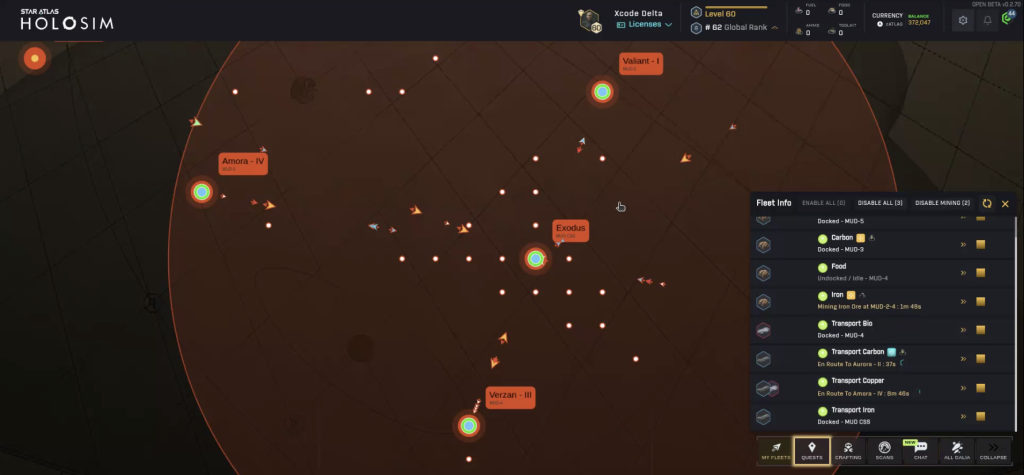
Holosim
John (Product Manager at Star Atlas) and Jose (Lead Lore Writer) join on stage.
Holosim started as an onboarding system for SAGE. But midway through development, they understood it had huge potential. With that, it became something bigger. It allows Star Atlas to experiment without being tied to economic constraints such as SAGE.
The beta season focused on developing frameworks to help the team manage Holosim.
The Holosim roadmap going forward will be split into Seasons and Chapters. Seasons are the major updates that bring new content, logic, and quests. Chapters will be substantial but smaller additions that introduce new mechanics. Every chapter will introduce a new core mechanic while also polishing existing ones.
The new Season of Holosim is starting on August 20th! This gives the team a 7-day window to finish their preparations.
This new season comes with new mechanics, new quests, and a lot of polish.
Everyone will start at the same point. This first chapter is slated to last 5 weeks. Every season can have multiple chapters, and those chapters can change in duration.
Holosim – New Transport Automation Options
Update 1 – Cargo Manifests
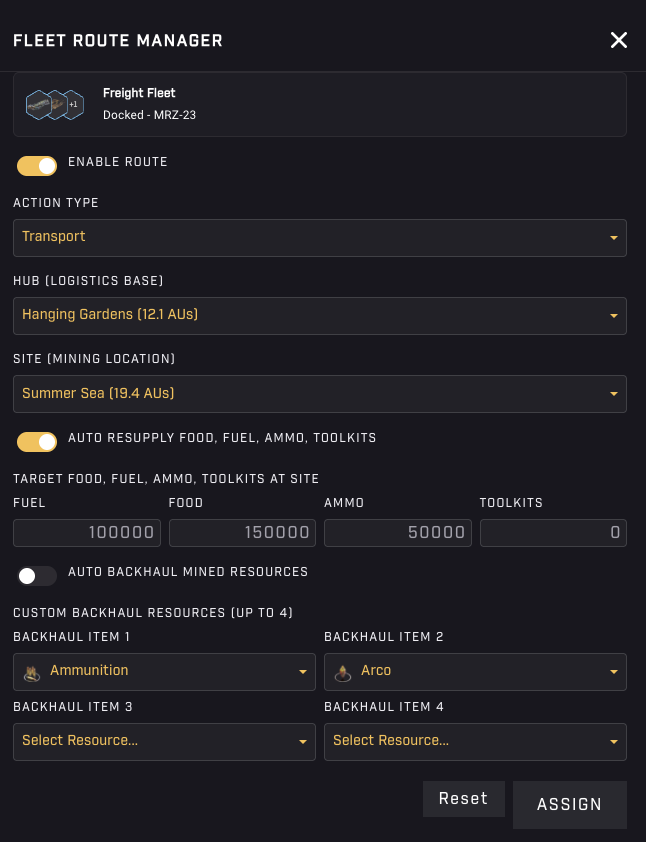
There is an update to the road manager. John explains that disrupting supply lines is fine, but having to redo your setup after your fleets were blown up is quite annoying. The team tried to solve this by adding a Cargo manifest.
Freighters can now be instructed to keep a certain Starbase supplied with a certain level of Fuel, Ammunition, and Food. And the will (by default) haul back whatever is mined there (it will detect this)
You can also disable the auto-backhaul and choose which resources you want to send back.
In the near future, the team plans to add an option to add more ships/fleets to that route. For now, you can easily copy the route of an existing fleet.
Mining ships are infinitely more productive, so you can set up several freight ship fleets to haul resources up and down.
The goal is to spend way less time micromanaging the automated routes.
Update 2 – Basic Territory Control
Starbases will defend themselves; they have HP and SP like ships. When a Starbase loses all shield and hitpoints, the last faction to fire at it will take control, after which they will have to repair it. Starbases will only defend when attacked, not when hostile fleets get near.
If a Starbase changes hands, anything that was friendly in that sector is now locked in. Those assets are prisoners of war. The original faction would need to reclaim the Starbase to regain control of these assets.
Contract redemption will remain the goal for now, but the team will likely phase these out when territory control is fully working and stable.
Starbase Tiers have an impact on the LP that is released, but their defenses scale with Tiers as well.
The upgrades from Tier 1 to Tier 2 are linear. The same amount of materials is required from Tier 2 to Tier 3 as were needed to go from Tier 1 to Tier 2. One caveat is that there is still a need for one additional resource per Tier, as is the case today in both SAGE and Holosim.
In general, the idea is that as features mature, they may be applied to SAGE as well.
Other Updates
- Every character that is part of the quests will have a unique voice in this update as well.
- Crew emissions will be more favorable to people actually playing. More through quest progression and less through daily quests.
- There are a few new ships as well (especially smaller).
- No HRZ, but if you have a fleet docked at a Starbase that another faction conquers, you will lose them (possibly temporarily)
Monetization
The team is experimenting with monetization options to appeal to a broader audience, including people accustomed to micropayments.
The team has therefore integrated Stripe, allowing players to use credit cards without needing crypto wallets. Using that connection, users will be able to buy a Battle Pass.
These Battle passes come at a fixed cost and provide:
- Cosmetic rewards
- A bonus to the daily quest rewards
- There will also be rewards for login streaks (e.g., claiming the daily quest 5 days in a row), and the battle pass will allow you to skip some days.
The purpose is to demonstrate the team’s ability to monetize this product and to provide some interesting mechanics using it.
Michael remarks that he is happy to add another revenue stream to the company.
Partnerships
New features are not the only thing coming to this new chapter. There are some massive partnerships in place with the Solana ecosystem to provide some incentives to players.
The goal is to reach Web3 native users who are on other games, as the team wants to recruit them into Solana and Star Atlas.
Michael is introducing a major partnership with Solflare Wallet They are contributing 50 SOL and $5000 worth of stablecoins to the rewards for Chapter 1.
The team will supplement that pool with about $9k in game assets.
This will come with a banner in the Solflare Wallet to push more people to Holosim. The goal is to reach Solana natives and bring them to Star Atlas.
But the team also needs to bring value back to Solflare. Since Holosim lacks a native wallet connection, there is a great opportunity to direct Web2 players to Solflare when they need to connect their wallets to receive their rewards.
Huge shout-out to Solflare!
Z.ink
Z.ink
Dominic (Marketing Manager) is joining the stage
Dominic plays a logo teaser (see image above) for Z.ink.
The team is going to launch their own L1 Blockchain, called Z.ink. This chain will be running the Solana Virtual Machine, meaning it will be fully compatible and composible with Solana.
Michael explains that Z.ink has been in development for years now. This goes back to 2022 when they worked on the Player Profile primitive, and 2023 when they launched Atlasnet to test their program deployments. The Z.ink brand itself was established in 2023 as well, though it was initially intended to be a pure identity play.
Z.ink – Identity
Michael shares that this chain will allow you to establish a deep emotional connection to it. This is something no other chain is attempting.
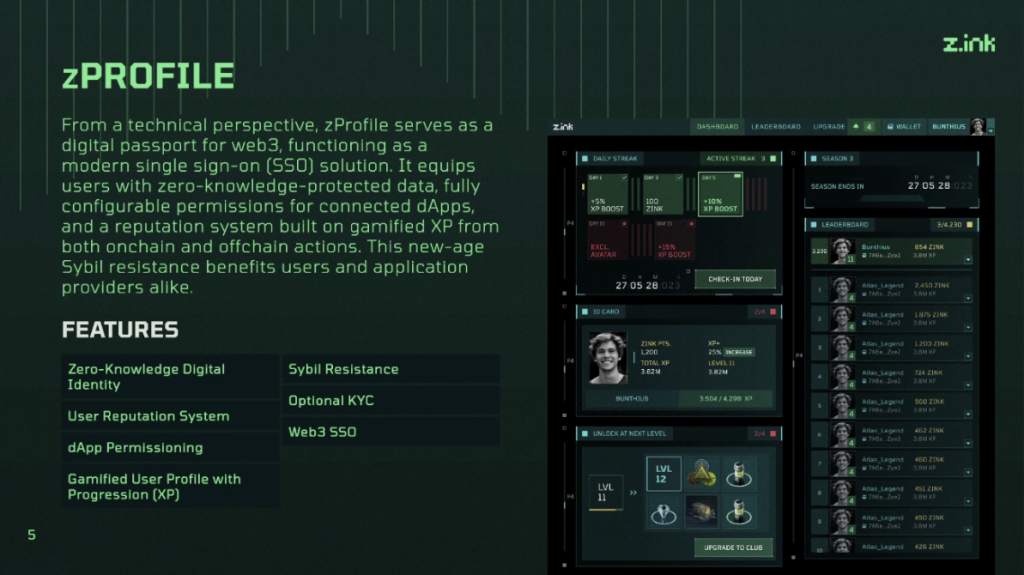
zProfile
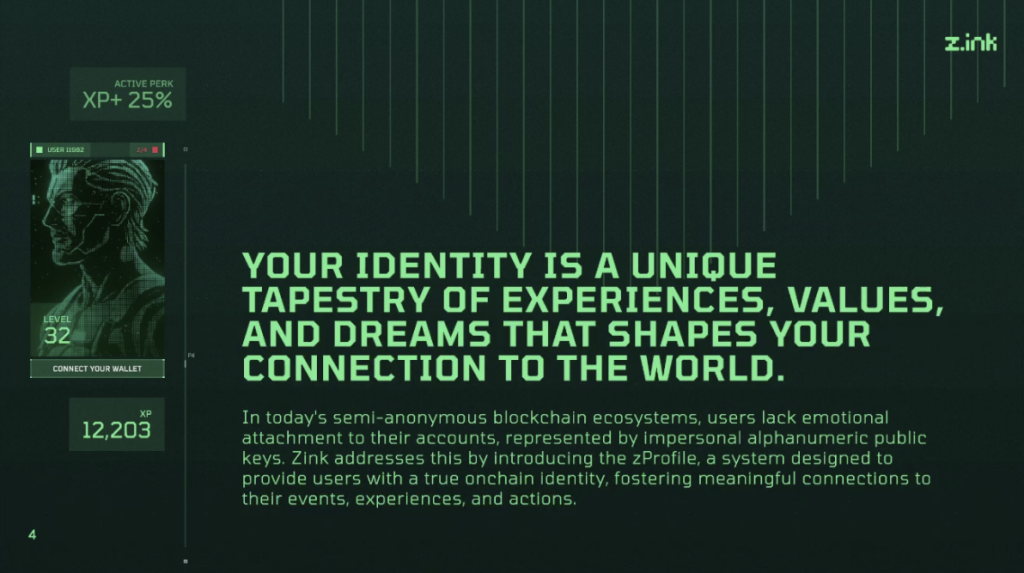
The most unique element of Z.ink is the introduction of zProfile, which leverages the Player Profile we know from Star Atlas. One thing that is lacking in crypto is the ability to truly identify with the network you are operating on. Z.ink allows you to have an on-chain gamified profile. You are earning XP and progressing your profile, establishing status and reputation while you do that. Michael adds that you can treat this on-chain profile as an avatar.
Z.ink – zProfile
What makes this identity piece so powerful is that your data is protected behind a zero-knowledge proof.
There is a KYC component, which will remain optional unless regulation forces the team to make it mandatory. Michael fears that KYC may become mandatory from a regulatory standpoint one day. But again, this will be fully optional upon launch.
This unlocks the potential for binary-based responses based on various requests, which can come from different applications, such as DEXes, DeFi protocols, and other games. In other words, when another service on Z.ink needs KYC, they can use your zProfile instead of implementing their own. They won’t get your personal data; they will just get a heads-up that you have performed the KYC check. This should be sufficient for most services.
This also comes with dApp Permissioning, which means that, when you connect to another application on Z.ink, you can set specific permission settings for that application in your profile. This allows you to expose only part of your on-chain assets to that service, without compromising the security of your entire wallet.
Note that many features are not fully implemented yet today.
Independent Entity
Z.ink is an independent entity; it acts as a fully owned subsidiary of ATMTA. The team is in the process of raising capital, allowing them to build out a dedicated team within Z.ink that focuses on the L1 development, ecosystem growth, and feature development, like the optional KYC process.
This is not intended to be a distraction from what the team is focused on at Star Atlas. The core team is working on StarAtlas exclusively. There is some engineering crossover right now because they are in the early stages.
This should also alleviate some of the burden on the SA team, as they would otherwise have to build some of these components themselves on Solana.
Z.ink – SVM Base Layer
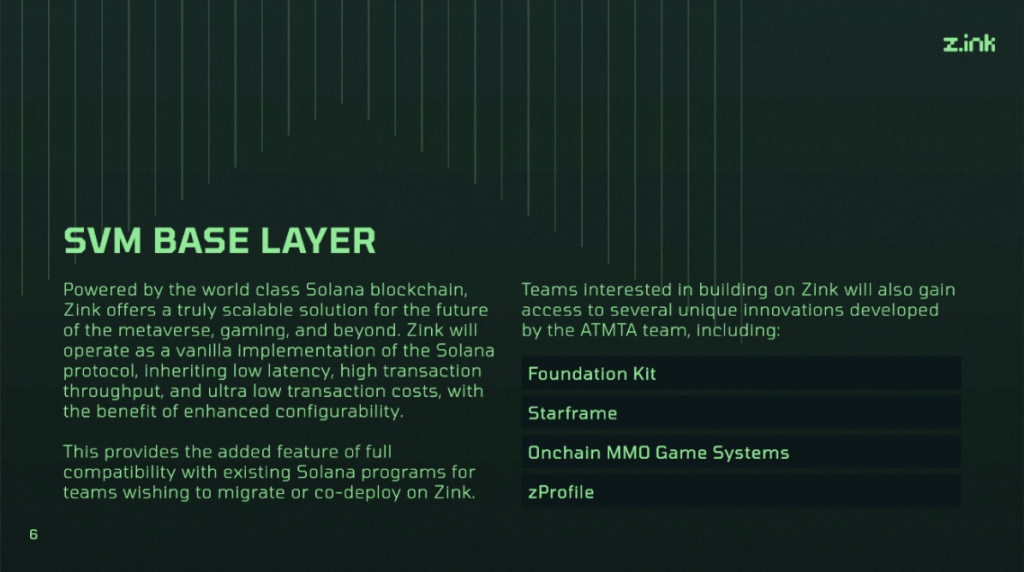
SVM Base Layer
The team is not making any changes to the Solana Consensus mechanics. Z.ink will be (initially) dedicated to Star Atlas. It allows the team to minimize the fees.
In the recent past, the team saw that as priority fees spiked, players with a smaller asset portfolio weren’t able to even play anymore, profitably. Expectations are that transaction fees will drop by 99+% on Z.ink.
The team will make their Foundation Kit, Starframe (Anchor upgrade), and other tools and services available to other services willing to launch on Z.ink as well.
Z.ink – Network Roadmap
Roadmap
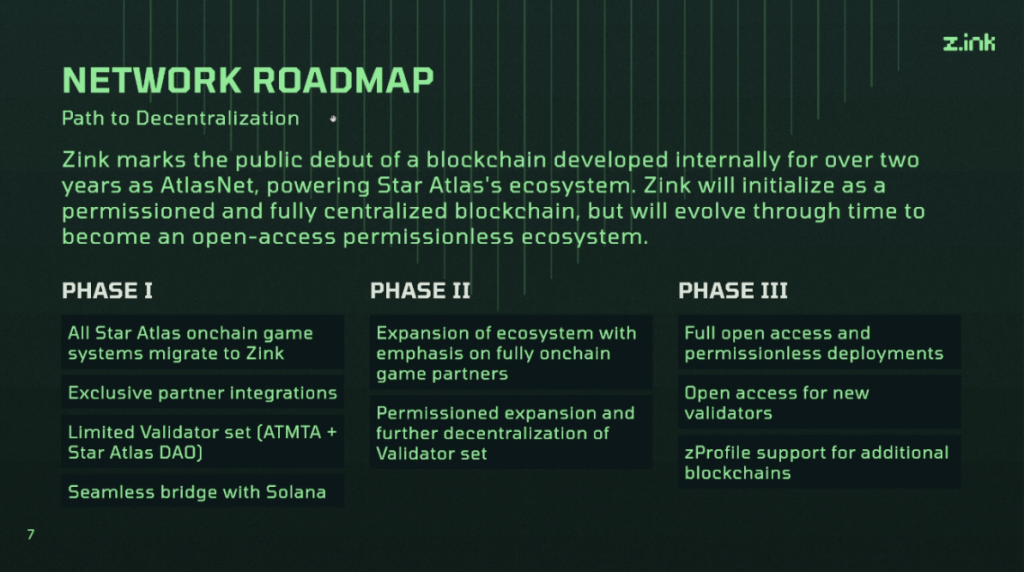
The team is starting this in a highly permissioned fashion. The team anticipates starting with an exclusive set of validators. This includes 3rd parties, not just the ATMTA team. The DAO will be operating one, though ATMTA will probably have custody of this at the start.
The emphasis is on a very strategic, very controlled approach to maturing the network. The goal is to ensure they can prioritize Star Atlas initially. But over time, it will become open access and permissionless with a much wider validator set.
They are not branding Z.ink as a gaming chain or for any other particular niche. It is a general-purpose blockchain. That said, the team does want to focus on other Web3 gaming projects as their initial priority, and then expand from there.
There will be a seamless bridge; this has already been built. From the team’s side, they are moving all game logic to Z.ink during upcoming releases. SAGE Starbases will continue to run on Solana, but SAGE C4 will be running on Z.ink from day 1.
Z.ink – Boostrapping with Star Atlas
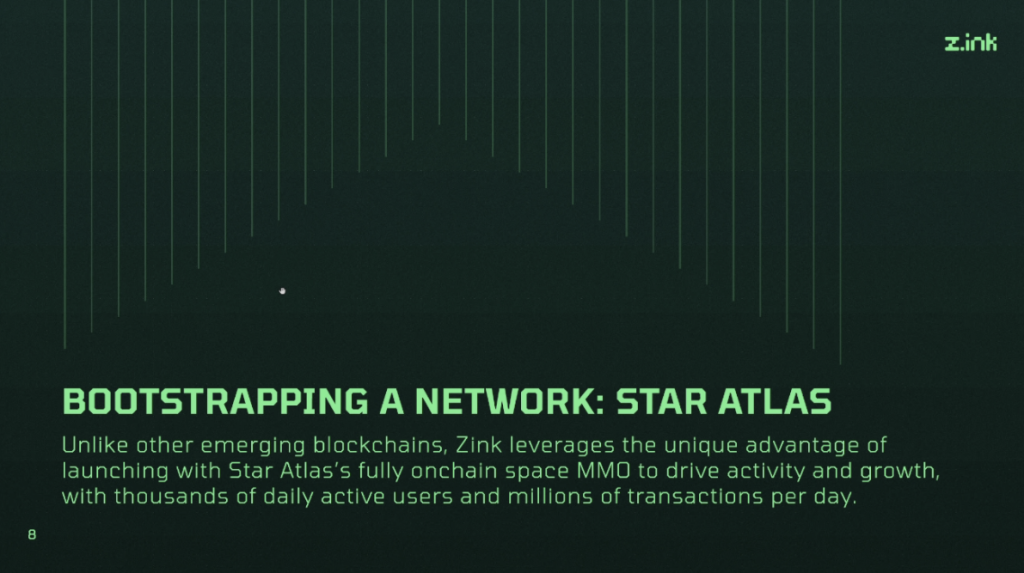
Bootstrapping
One of the issues any new chain experiences is the cold-start problem. You may have great tech, but you need to attract developers and users. But this is a chicken-and-egg problem (one won’t come without the other). Star Atlas immediately solves this problem because it has a native user base and quite a significant number of daily transactions.
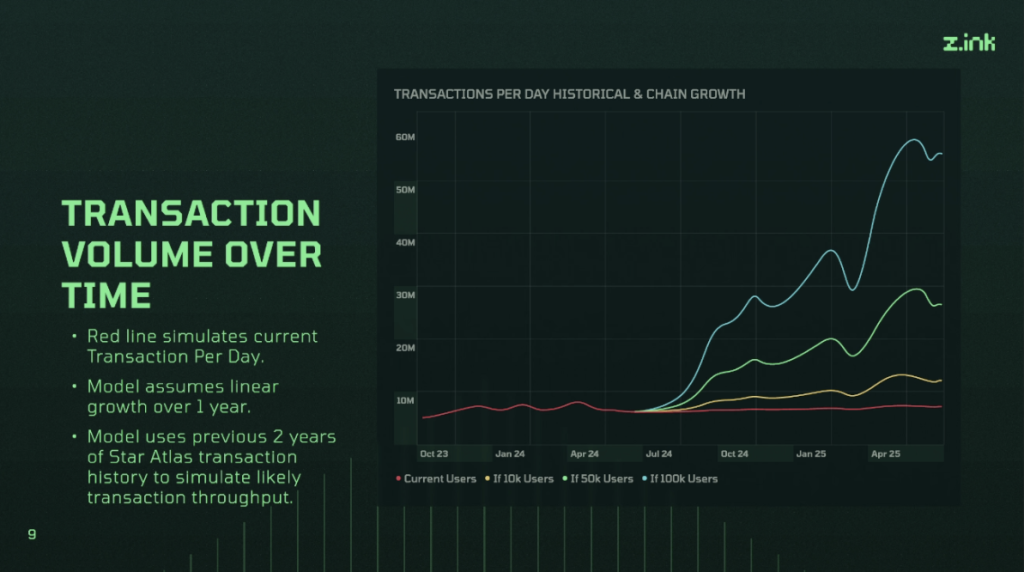
Z.ink – Transaction Volume
Even with the existing user base, the team produces more on-chain transactions than many L1s and L2s. It eclipses Ethereum and Avalanche. If the user base grows, this could grow into a top 10 blockchain based on network activity.
Michael is quite optimistic about what they can achieve with Z.ink, given that they are bootstrapping it with Star Atlas.
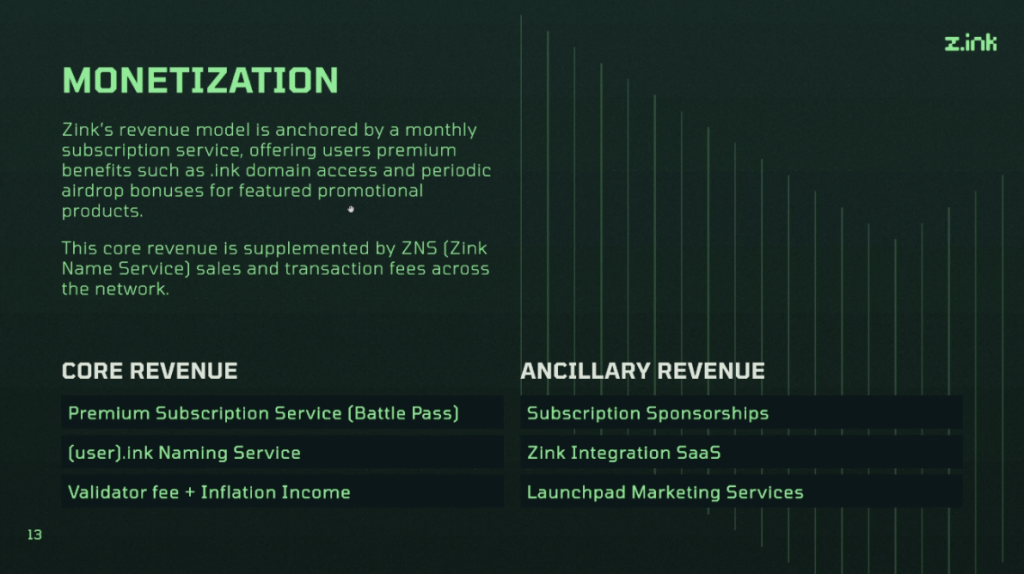
Z.ink – Monetization
Monetization
This is another unique element that the team will add to their network: a Premium subscription service.
They will be rolling out their own equivalent of a naming service (analogous to .eth and .sol). The big difference is that you have an on-chain personified profile behind it. You can show people how long you’ve been active on-chain and the XP you earned.
ATMTA will also run a validator on this network, so they will pick up network inflation subsidies as well as a share of the network transaction fees.
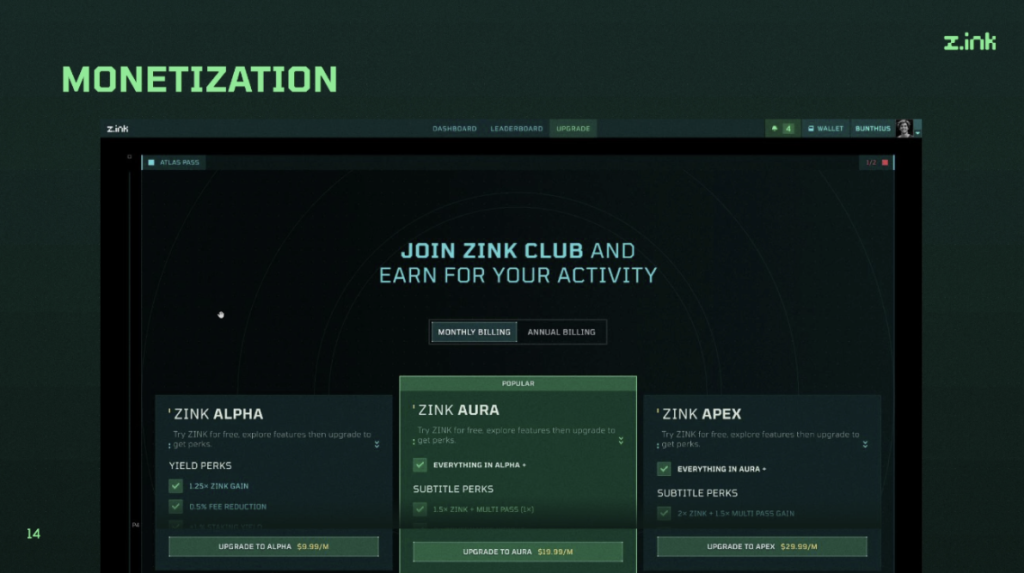
Z.ink – Monetization
The goal is to drive the value proposition of being a subscribing user. Some of the immediate perks they can add are multipliers to your XP and allowing you to get your premium domain “for free”.
Zink will layer in perks for some of the other Star Atlas products. For example, you would get the Holosim battle pass as part of this, without having to buy it through Stripe. Higher tiers would allow users to earn Star Atlas assets if they progress their XP.
As ATMTA recruits other teams, they can include them in the Z.ink subscriptions. This can be a marketing and user acquisition strategy. They can also choose to airdrop to everyone who is level 20 on the network, or allow those users to receive something.
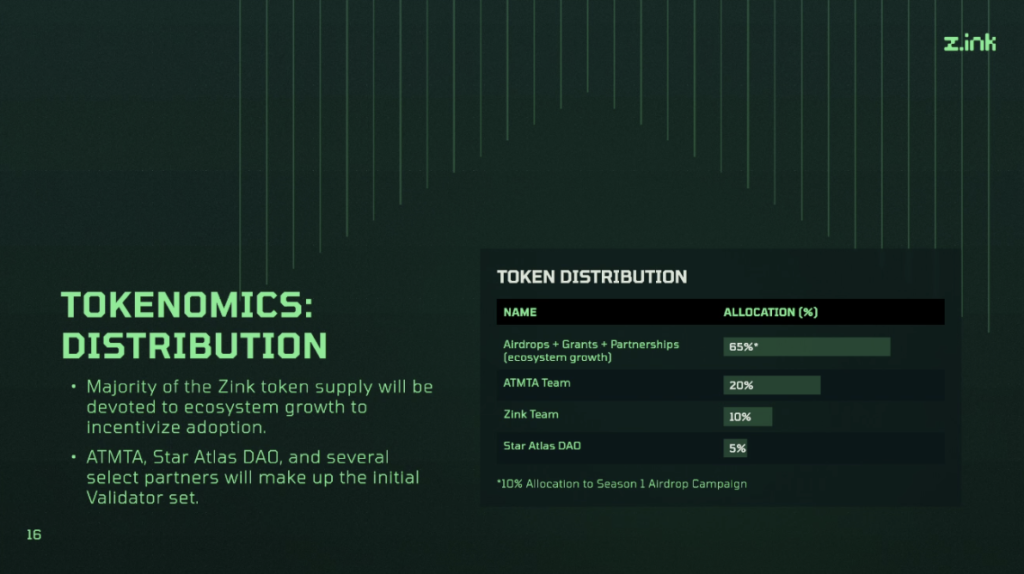
Z.ink – Tokenomics
Tokenomics
Z.ink is launching with its own separate token: Zink. The total supply is planned to be 100M tokens.
Two-thirds of the token supply is allocated to Airdrops, grants, and partnerships. ATMTA gets 20%, Zink gets 10% and the DAO gets 5%.
The DAO will get another revenue stream in the form of network inflation and transaction fees (through their validator). One of the core reasons why the DAO is also included in the allocation is in case Z.ink absolutely explodes. If that happens, the team would be back at the start of the year, trying to solve the throughput, consistency, and priority fees. Ensuring the DAO earns Zink allows the DAO to optionally subsidize transaction fees, if needed.
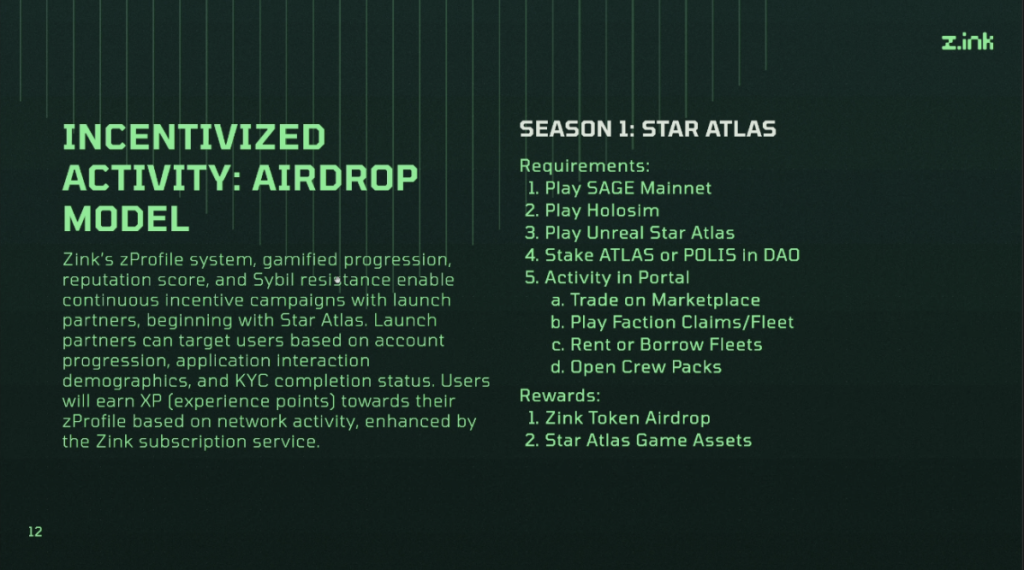
Z.ink – Incentivized Airdrop
Airdrop Season
The team is kicking this all off with an initial airdrop season for Zink. It will launch in September and run for 3 months, into December. The team anticipates a Network Genesis even in December.
All of the SA products will be running on ZINK in December.
The team is proving out the distribution concept by tying the initial XP progression mechanics on your zProfile back to engagement with Star Atlas. If you are playing SAGE, Holosim, or UE5 (Gunplay/Racing); or you are staking POLIS or Atlas; or trading on the marketplace, you’ll earn zProfile XP.
With a subscription, you can double the XP you earn, which in turn doubles the airdrop you’ll receive.
ATMTA expects to launch several airdrop campaigns after that, and they will continue to tie Star Atlas into those.
This is meant as a massive funnel into Star Atlas. If anyone wants to farm the ZINK airdrop, they would have to participate in Star Atlas.
All existing Star Atlas users are extremely well-positioned to participate in the Airdrop campaign, as they are already doing everything. Meaning everyone will receive a distribution from this airdrop.
Zink instead of Atlas & Polis
Michael was the biggest opponent of having a separate token initially, but there were great arguments for why this would be necessary. The team does believe this is the value-maximizing approach across the entire ecosystem, including Star Atlas.
Cons:
- The team forfeited an opportunity to drive additional utility to Atlas/Polis. However, it does not allow Star Atlas to expand beyond its existing user base and community.
Pros:
- The team requires a pool of tokens to incentivize decentralization. The Atlas/Polis tokens have already been fully allocated. The team would need to take from the existing allocation (reduce supply for game incentives & governance) or mint more tokens. Nobody would want to see that.
- The team also needs a pool to grow the ecosystem through grants and strategic airdrops.
- Launching a new token enabled the team to establish a new brand and create a marketing funnel. The only way to get the initial airdrop is to go play Star Atlas.
For all of these reasons, the team needed a new token. You can see this as a replacement for SOL. You will be spending Zink on transactions instead of Sol. So, you can see this as a token swap; there is no extra token as another one goes away.
Brett (VP of Engineering) joins the stage to help answer questions.
Bridging
There is a native, 2-way bridge that the team built. That will go online in December during the network’s genesis event. It is quite centralized, with options to potentially decentralize this over time.
Solana is the top-ranking network and ecosystem. The team does not want to fight that; they want to benefit from it, instead. They can do this because the network is using the exact same tech as Solana.
When SAGE C4 exits the PTR, it will go live on Z.ink. SAGE C4, with all of its systems, would be more expensive to run on Solana, compared to Starbased now. It was designed with Z.ink in mind.
It starts centralized, initially. This is because the team wants to solve the two biggest problems the community struggled with:
- Network stability
- Transaction costs
Z.ink allows them to solve this. If they open up the network fully on day 1, it may scale very rapidly, and they could re-encounter these same issues again.
The goal is to expand in a more controlled manner, enabling them to maintain a stable network with low transaction costs. Achieving decentralization is key to the vision of Star Atlas. The team will continue to pursue this.
SAGE
The game’s Port of Entry will detect your assets on both Z.ink and Solana. You can insert them into the game from both networks. When you take them out, you can choose the network you want them to reappear on. Bridging will happen automatically.
In other words, it will be super easy to move assets around!
Marketing
Z.ink becomes a great marketing and distribution platform. That is where it ties into Star Atlas Summer as well. The core goal is to stimulate interest in earning a token allocation by being active in all Star Atlas products.
One of the easiest ways would be to buy tokens and lock them. That is fine for the ecosystem as well.
Holosim also allows you to earn some of the allocation. The team’s goal is to drive people into Star Atlas products.
Wallets
Z.ink behaves as another Solana cluster, so all wallets theoretically already support it. Wallets could make it easier by adding a direct option to select it in their UI.
You can now go to z.ink, connect your wallet, and set up your profile, if you do not yet have one on Solana (for Star Atlas).
There will be a dedicated Atlas Brew next Wednesday on Z.ink with Michael and Brett.
New Landing Page
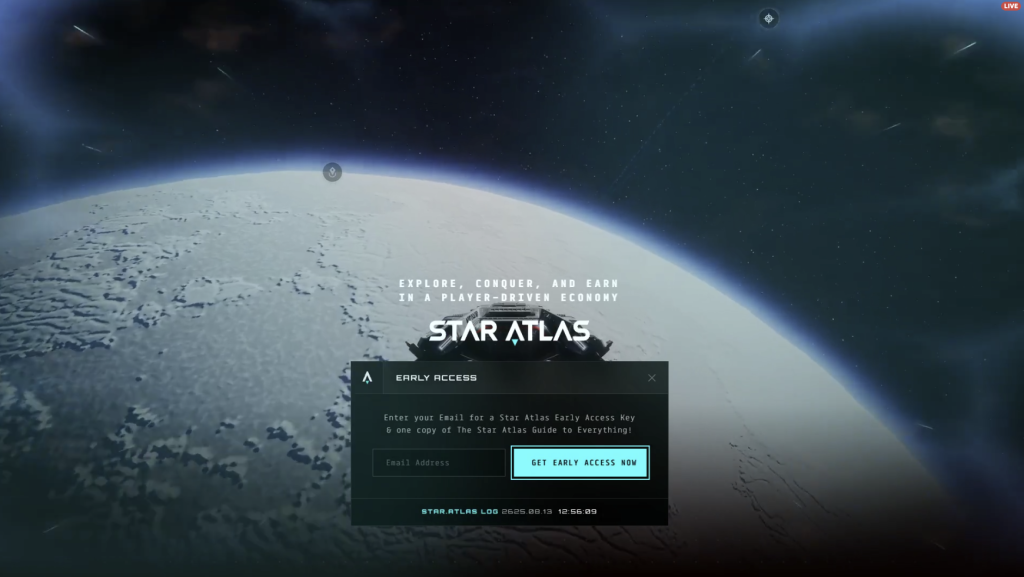
Star Atlas – New Landing Page
Dominic returns to reveal: The team has revamped the StarAtlas.com landing page!
In the past, the team has been fully focused only on the game, forgoing marketing. But now the team is in a stronger position. One thing they are doing is partnering up with content creators. The new landing page is another showcase of this.
Note: The email you submit will get you a game key and the Star Atlas Guide to Everything (~150 pages on Star Atlas lore, species, ship manufacturers, and more)!
You can scroll down to learn more as well (submit email, or click the X first).
The new website is focused on practicality, enabling people to get into Star Atlas immediately.
That is it for this Town Hall! Thanks for reading!