Welcome to our 152nd newsletter on Star Atlas! This weekly newsletter, published by Aephia Industries, focuses entirely on the development of this ambitious game. Here, we try to aggregate all the newsworthy tidbits revealed [mainly by the team] throughout the past week.
We had a very quiet week, so we’ll keep it short today. The most prominent news will be the changes rolled out in SAGE Labs: Starbased, affecting Fleet Destruction and SDU Scanning. Besides that, the Atlas Brew interview with Francesca is worth watching! To wrap this issue up, we share a community question regarding in-game labor markets along with the responses from Danny (CPO) and Michael (CEO).
Without further ado, let’s dive right in!
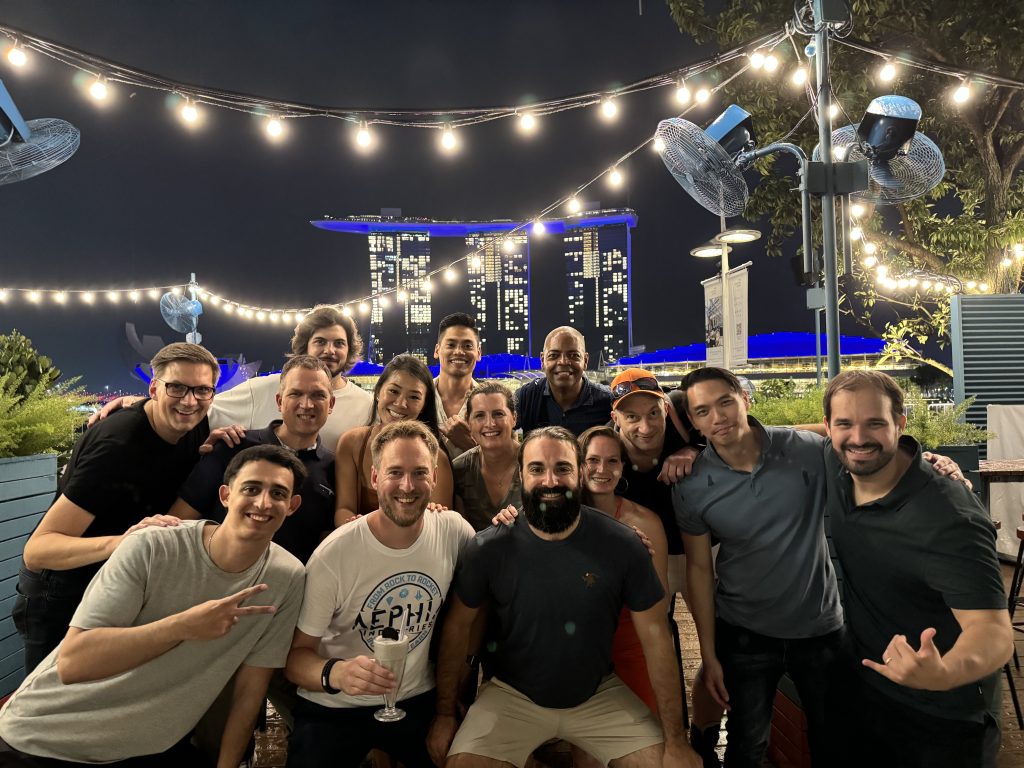
Just to have something here: This picture was taken during a meetup in Singapore a few days prior to IMPACT. Francesca (marketing director) is in the smack middle here.
Starbased – New Patch
Last week, the team rolled out patch v3.0.138, which contains a few important updates for Starbased. The first two changes involve Fleet Destruction, which bigger players have famously abused to quickly get their fleet back to the CSS (albeit empty). This patch seeks to close that loophole:
- Changed the self-destruct respawn timer to be the same as if you were sub-warping to your CSS
- Increased the ATLAS Fee for Fleet Destruction from 150 ATLAS to 300 ATLAS
The other change was made to SDU Scanning. Specifically, the team increased the potential for successful SDU scans a little through the following change:
- Increased the number of SDUs that can be discovered in a given sector per replenishment period from 1,000 to 1,200
Marketing Director Interview
This past Wednesday, the Atlas Brew was mostly about getting to know ATMTA’s new Marketing Director, Francesca. Since marketing is a key area where the team has been lacking, this interview is definitely worth listening to if you haven’t already!
You can do so through the recording by StarAtlasTV:
Wilder World Collab
Last week, the Wilder World project, a web3 game on Ethereum, shared the following message on X:
The Simulation will be built cooperatively. Who else do you want to see enter Wiami?
The image accompanying the tweet (see below) clearly shows Star Atlas (right-hand side) while also explicitly mentioning Star Atlas in the picture’s tags.
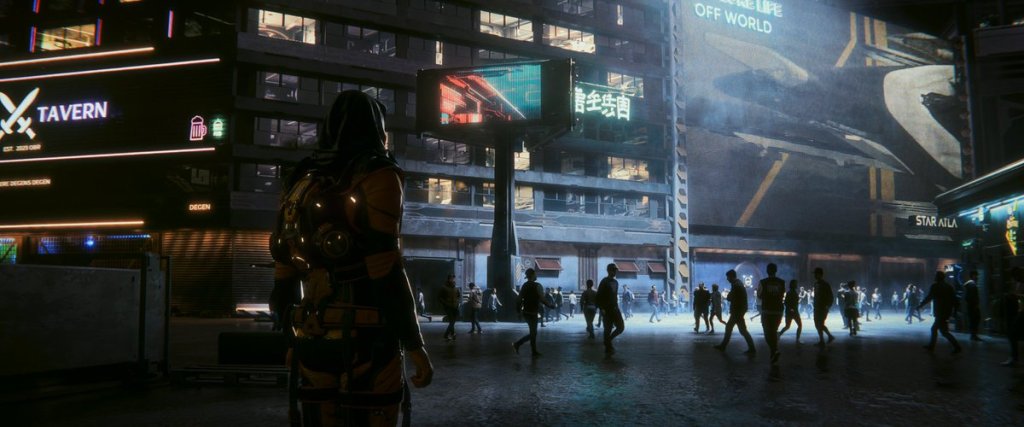
Wilder World – The Simulation will be built cooperatively. Who else do you want to see enter Wiami?
Though no official statement has come from either party, Michael (CEO) was chatting in the replies to this tweet, and Star Atlas also retweeted it.
Questions Answered
After the 2-part Community Concerns we went over previously (see #149 & #150), this week we found the following fine conversation in the Foundation Room (published with permission from all involved parties):
Q (Digital Fists): What are your plans to introduce game mechanics that facilitate the growth of a labor market in Fleet Command and then in Galia?
Labor adds value to an economy. In real life, we pay other people to do things for us. Some Web2 games have effective labor markets, where if you want something, you can grind for it or buy it from another player who has put in the work. In Web2, though, obviously, the currency is in-game and not extractable.
In Star Atlas—at the moment—automation removes the need for a labor market. Swagner I know you said scanning is set and forget and mining requires fleet management, but I would argue that the mining loop is also set and forget if you are using automation and doing it right. I am all for automation that removes mindless, boring clicking. No one should have to tell their fleets to redo a mining loop every hour. But this automation means that currently, you can do everything yourself with very little effort, and you never need to pay anyone else to do anything for you.
An example of a game mechanic that would introduce labor is having moving asteroid belts that constantly change position and minable resources. Mining would then require more human work, at least for fleet management, rather than simple set-and-forget. While set-and-forget is possible, it’s difficult for players to add value to the economy by giving their time. Maybe not the best example here coz, no doubt, someone will still bot it all.
An example of a labor mechanic in UE5 would be to make shortcutting travel through subwarps and warp gates come with a cost, while manually flying a ship across space is free. That way, people could work as freighters. Giving their time would add value.
I think creating a labor market is essential to the SA economy, so I just wondered what your plans are. (Besides fleet rentals which imo is not a good example. Why rent fleets out whilst it’s so easy to set and forget?). [edited slightly for clarity]
A (Danny): The design philosophy for final form is to favor people in seats over automated NPC in seats because then it incentivizes whales with a lot of seats to fill them with people which is good for everyone. The important milestone before we can really achieve that is anti-cheat mechanisms. Our highly incentivized rewards will make bots and exploits lucrative. Almost anything we add can be automated even with trained ai agents that could play like a human would play and be undetected. But there are a lot of things we could make to at least spread that labor out between people in seats vs AI crew. It’s not off the radar it just takes time to get there.
A (Michael): I’ll add a few comments here beyond Danny’s response. I think you already captured some of the future mechanics that will lead to deeper labor markets. Which, by the way, I discuss frequently. I would point to those opportunities as a demonstration of how Star Atlas extends beyond gaming. It’s bigger than that, although the gaming product is central and essential to everything that we’re doing. But I just imagine the diverse participants in Star Atlas in the future. Commercial centers with real world merchants and business, extravagant social events on CSS’s and Titans (i.e. Superphoenix concert), “investors” allocating capital to asset ownership because they can generate cash flows, people simply socializing on space stations, artists participating in cosmetic asset design and selling their work on marketplaces, alongside other UGC elements. My dream for Star Atlas is for it to become a full fledged Cybernation, and land of opportunity for people all over the world to participate. Gamers will be the first residents and citizens of this Cybernation, but will not be the only participants.
So, with that in mind, the single largest variable in achieving more robust labor markets will be layers of depth to the economy, and the ability to specialize in a particular product niche. To your point, that doesn’t exist now. We’re still in the early stages of development. But as the game matures, I fully anticipate the opportunity to specialize to emerge as well. That might mean being a Diamond miner, exclusively. One who sells to the operator of a refinery. Who then engages another player to navigate risky deep space to transport it to another destination to fulfill a resource contract. We’ll see how interesting the game gets when we do balance and add combat in to the game. And I think we’ll still need to analyze of modify space travel distances and time to get to a more reliable model longer term. But this concept of specialization is core to the sustainable economy. We have to drive P2P trade and activity as part of the game. It will be crucial for P2E in SA after the ATLAS emission curve exhausts (even if the DAO decides to institute a perpetual inflation rate).
Perhaps dovetailing on Danny’s comment, I also see massive potential in employment through skill. Let’s say you’re a gamer playing Star Atlas, leveling your account, unlocking licenses, and you become a high skill Commander operator. Someone else owns a Commander but doesn’t have the account progression to utilize it. They might end up hiring these pilots to operate their assets for them. Pay someone in an emerging market a wage to operate your ship, picking up contracts on the job board and completing them for payment. Or maybe you need to hire a squad of competitive PVP gamers to go clear out a region of space so you can set up operations there. And then also hiring security forces to protect your land. Stuff like this is viable. Council rank, character progression, and player skill will drive all of these labor markets in the future.
Otherwise, starting with fleet rentals, but continuing with scholarship systems, adding new methods for players to get access to assets and excel. I’ve also been discussing some options to sponsor schools or other forms of educational facilities to onboard the next generation into Web3. Teach them how to code. Teach them how to play. And open their eyes to the new opportunities in the digital realm. Starting with emerging market economies. And otherwise getting DACs involved in all of these processes.
Finally, just a quick note: you may have seen that IKEA is hiring people to sales reps in their “metaverse.” I could easily see people employed to clock in and work out of storefronts in SA in the future.
That’s it for this week’s issue! Thanks for reading!